
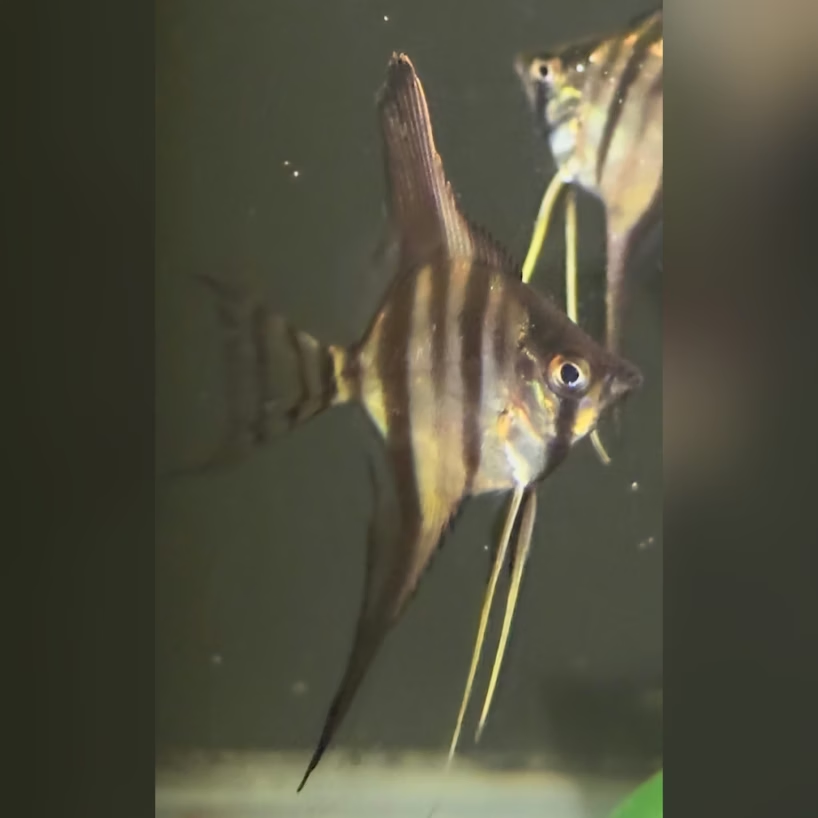
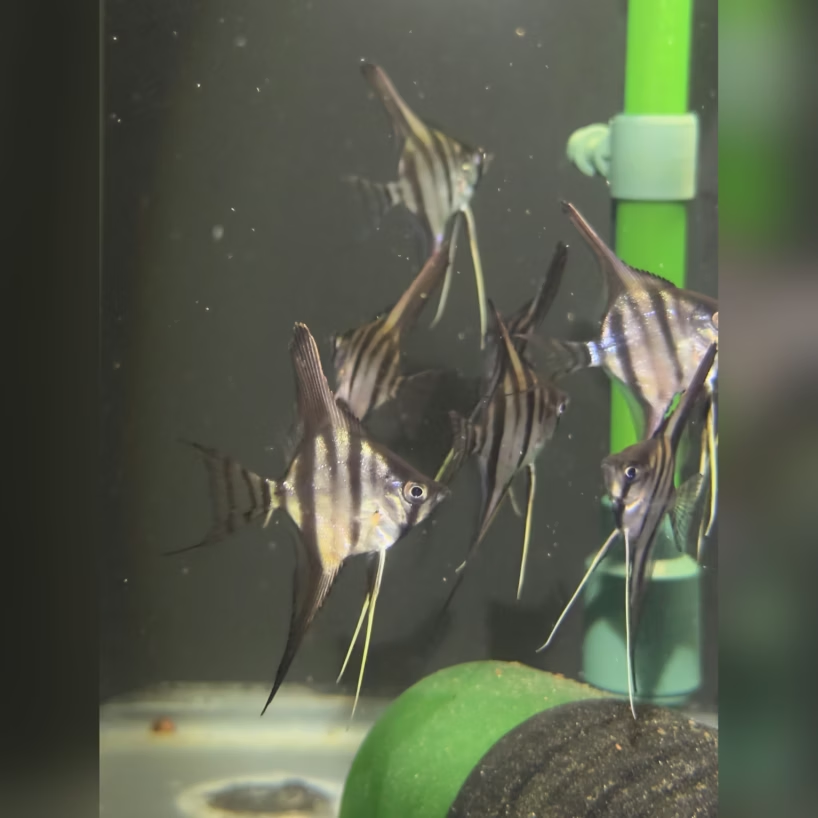
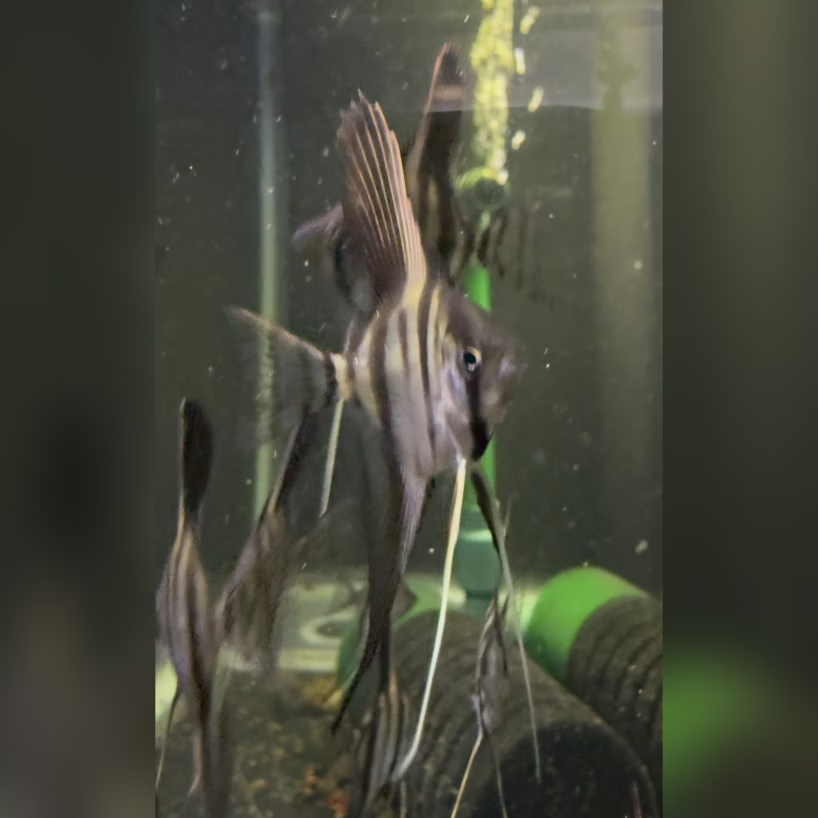
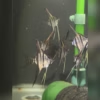
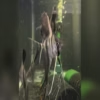
Pterophyllum scalare var. Santa Isabel – Wild Caught at Igarapé Marauiá
For keepers who care where a fish actually came from, this is a wild-caught Pterophyllum scalare collected at a single point: the Igarapé Marauiá, a tributary of the Rio Negro in the municipality of Santa Isabel do Rio Negro, Amazonas, Brazil, deep in Yanomami country. The Rio Negro is the largest blackwater river on Earth – tannin-stained, soft and acidic – and fish from its tributaries carry the tall, narrow build and clean dark barring that made the Santa Isabel region famous among wild angelfish collectors. These are not tank-bred fish sold under a locality name: they were netted in the Marauiá and shipped to us. Described by Schultze in 1823, P. scalare remains the benchmark against which every domestic angelfish strain is measured, and wild stock like this is where those strains began.
Igarapé Marauiá Angelfish Key Features
-
Single Collection Point: Caught in the Igarapé Marauiá, not pooled from across the Rio Negro. Locality is what separates collector-grade wild scalare from generic “Amazon” imports.
-
Blackwater Origin: The Marauiá feeds the Rio Negro, the world’s largest blackwater river – soft, acidic, stained dark by tannins from the surrounding flooded forest.
-
True Wild Stock: Wild caught, not F1 or tank-raised under a locality label. Wild scalare show a taller, narrower body and longer ventral filaments than domestic strains.
-
Clean Wild Barring: Dark vertical bars over a silver-gold body, with amber tones through the head and the dorsal edge – the unmodified pattern the species carries in the wild.
-
Currently Small Size Only: Medium and Large appear on the size list but are sold out. Small is the grade in stock now; the larger grades return with the next collection.
Igarapé Marauiá Angelfish Care Requirements
-
Tank Size: Minimum 30 gallons, and height matters more than footprint – a tall tank suits the body shape and lets the ventral filaments hang without touching the substrate.
-
Water Temperature: 79–86°F (26–30°C). Wild Rio Negro fish come from warm water and do best at the upper end of the usual community range.
-
pH Range: 6.0–7.0, hardness 3–10 dGH. Soft, slightly acidic water matches their home blackwater; peat, alder cones or catappa leaves help hold those conditions.
-
Diet: Omnivorous with a preference for live and frozen food. Frozen bloodworms, brine shrimp and daphnia alongside a quality flake or slow-sinking pellet. Wild fish take prepared food readily once settled, but condition faster on frozen.
-
Tank Mates: Peaceful with fish too large to be eaten – rummynose and lemon tetras, corydoras, Apistogramma and discus all work. Avoid fin-nippers such as serpae tetras and barbs, which target the long filaments.
Why Choose Our Igarapé Marauiá Angelfish
Wild angelfish arrive from the Rio Negro stressed and thin, and they need weeks of quiet conditioning in soft water before they are stable enough to move on. At Amazonia Tropical Fish LLC, our Igarapé Marauiá Angelfish undergo a rigorous, multi-week quarantine process. They are prophylactically treated for internal and external parasites and are verified to be eating well before they are ever offered for sale. You are receiving premium, stabilized stock.
Shipping & Live Arrival Guarantee
We safely ship these wild-caught angelfish nationwide from our US-based facility using specialized, insulated packaging. Every order is fully covered by our Live Arrival Guarantee.
![Apistogramma cacatuoides "Double Red" [female only ]](https://amazoniafish.com/wp-content/uploads/2025/10/apistogramma-cacatuoides-double-red-01-300x300.avif "apistogramma-cacatuoides-double-red-01")